Encoder Readhead: Working Principle, Types, Applications, and Selection Guide

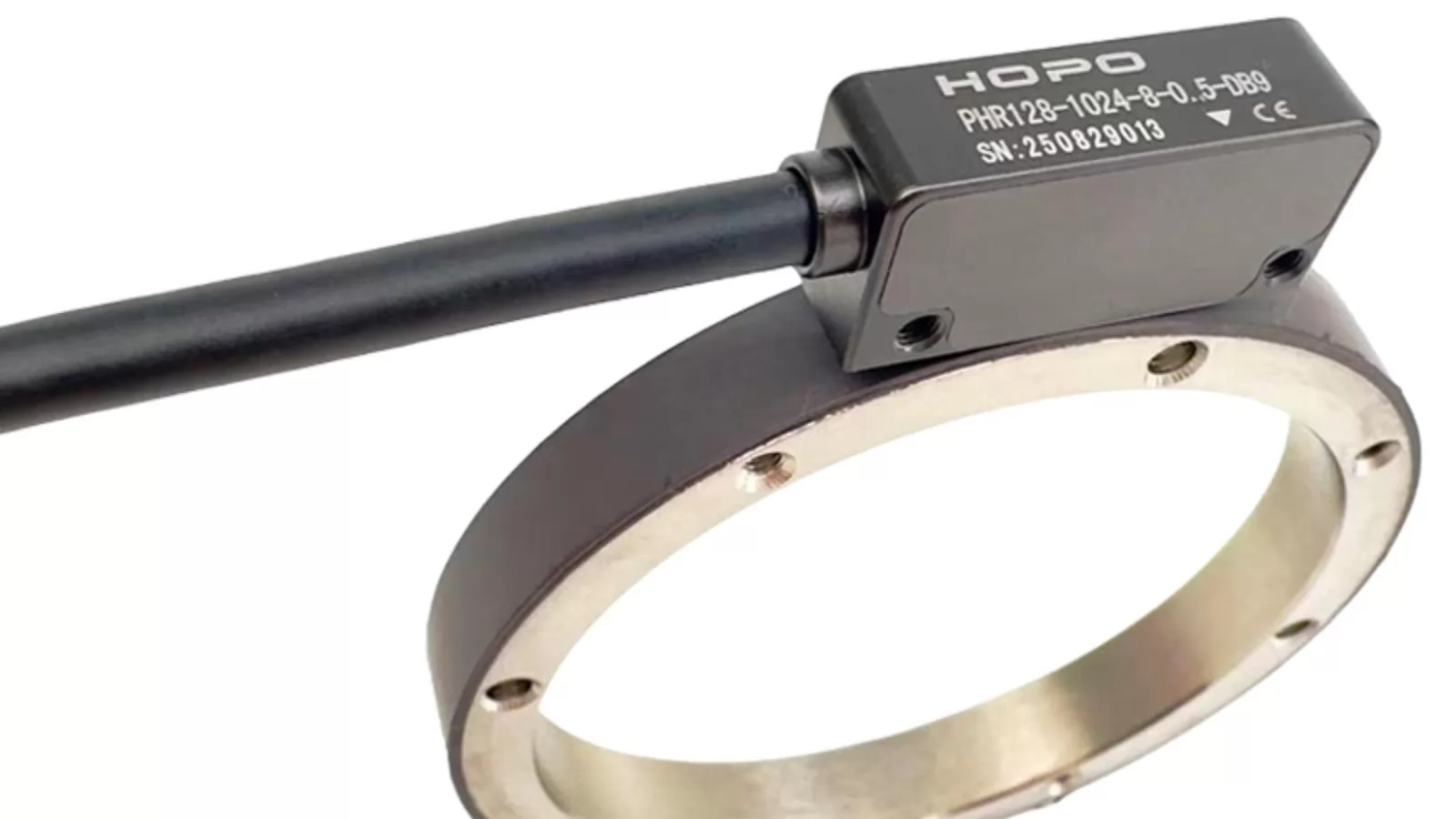
An encoder readhead is the sensing component that detects positional information from an encoder scale, magnetic ring, or other measuring element and converts it into electrical signals for motion feedback. It is a critical part of many linear and rotary encoder systems used in CNC machines, automation equipment, servo systems, and precision motion applications.
The performance of a readhead affects important characteristics such as resolution, accuracy, repeatability, maximum operating speed, and environmental reliability. However, the readhead should not be selected independently. Its sensing technology, scale compatibility, output interface, sensing distance, and mechanical installation requirements all need to match the application.
This guide explains what an encoder readhead is, how it works, the main types available, the specifications that matter, and how to select the right solution for an industrial or OEM application.
What Is an Encoder Readhead?
An encoder readhead is the part of an encoder system that reads information from a measuring scale or ring. As the machine moves, the readhead detects changes in the scale and converts them into electrical signals that a controller or drive can use to determine position and motion.
A basic encoder system can be represented as:
Encoder Scale → Readhead → Signal Processing → Motion Controller
The scale provides the physical measurement reference, while the readhead detects the information contained in that reference. Depending on the design, the readhead may use optical, magnetic, inductive, or other sensing technologies.
The output can provide information about:
- Position or displacement
- Movement direction
- Linear or rotational speed
- Reference position
- Incremental position changes
- Absolute position
The readhead therefore plays a central role in the feedback loop. Its performance depends not only on the sensing element but also on the scale, installation accuracy, signal interface, and control electronics. To understand the broader measurement system, it helps to review how linear encoders function in complete feedback loops.
How Does an Encoder Readhead Work?
Although different encoder technologies use different sensing methods, their basic function is similar: detect changes in a measuring element and convert those changes into usable feedback signals.
1. Detecting the Measuring Scale
The first stage is sensing the information contained in the encoder scale, ring, or track. An optical encoder readhead uses a light source and photosensitive elements to detect optical patterns or changes in light intensity. A magnetic encoder readhead detects changes in a magnetic field generated by a magnetic scale or ring. The choice of sensing technology affects the encoder's resolution, environmental resistance, installation requirements, and suitable applications.
2. Detecting Movement and Direction
When the scale moves relative to the readhead, the sensing system detects changes in the measured pattern. In an incremental encoder, these changes are converted into a sequence of pulses. A/B quadrature signals can be used to determine movement direction, while a Z or reference signal may provide a repeatable reference position. Absolute encoder systems use coded information to determine a specific position rather than relying only on accumulated incremental pulses.
3. Converting Information into Electrical Signals
The detected information is processed and converted into an output format that the machine controller can understand. Depending on the encoder design, outputs may include A/B quadrature, A/B/Z signals, differential signals, analog signals, or serial digital communication. For industrial equipment, interface compatibility is important because the readhead must communicate correctly with the CNC controller, servo drive, or motion controller.
4. Providing Motion Feedback
The resulting signal is sent to the control system, which compares actual motion with the desired motion. This feedback can be used to regulate position, speed, and direction in a closed-loop system. This is why the readhead is more than a simple sensor. Its electrical and mechanical characteristics can directly influence the performance of the complete motion-control system.
Types of Encoder Readheads
Encoder readheads can be classified according to sensing technology, motion type, and position measurement method. These classifications can overlap; for example, a product can be a magnetic, linear, incremental encoder readhead at the same time.
Optical Encoder Readheads
Optical encoder readheads use light-based sensing to detect patterns on an optical scale or disc. They are commonly selected for applications requiring high measurement resolution and precise position feedback. Typical applications include precision positioning stages, metrology equipment, semiconductor machinery, and other controlled environments. Because optical sensing relies on detecting fine physical patterns, contamination should be considered during selection. Dust, oil, or other particles may affect performance if the encoder is not adequately protected.
Magnetic Encoder Readheads
Magnetic encoder readheads detect variations in a magnetic field generated by a magnetic scale or ring. A major advantage of magnetic sensing is its suitability for demanding industrial environments. Magnetic readheads can provide non-contact measurement while offering strong resistance to contamination and mechanical wear. They are commonly considered for CNC machinery, factory automation, linear motors, servo systems, and industrial positioning equipment. For high-reliability applications, explore Hopo Magnetic Encoder Readhead Products designed for challenging environments.
Linear Encoder Readheads
A linear encoder readhead works with a linear scale to measure straight-line displacement. The basic arrangement is:
Linear Scale + Readhead = Linear Position Feedback
Linear encoder readheads are used in CNC axes, linear motors, precision stages, measurement equipment, and automated positioning systems. The required resolution, accuracy, maximum speed, sensing distance, and scale compatibility should be considered together because the mechanical relationship between the readhead and scale directly affects measurement performance. Learn more by checking out Hopo Linear Encoder Products.
Rotary Encoder Readheads
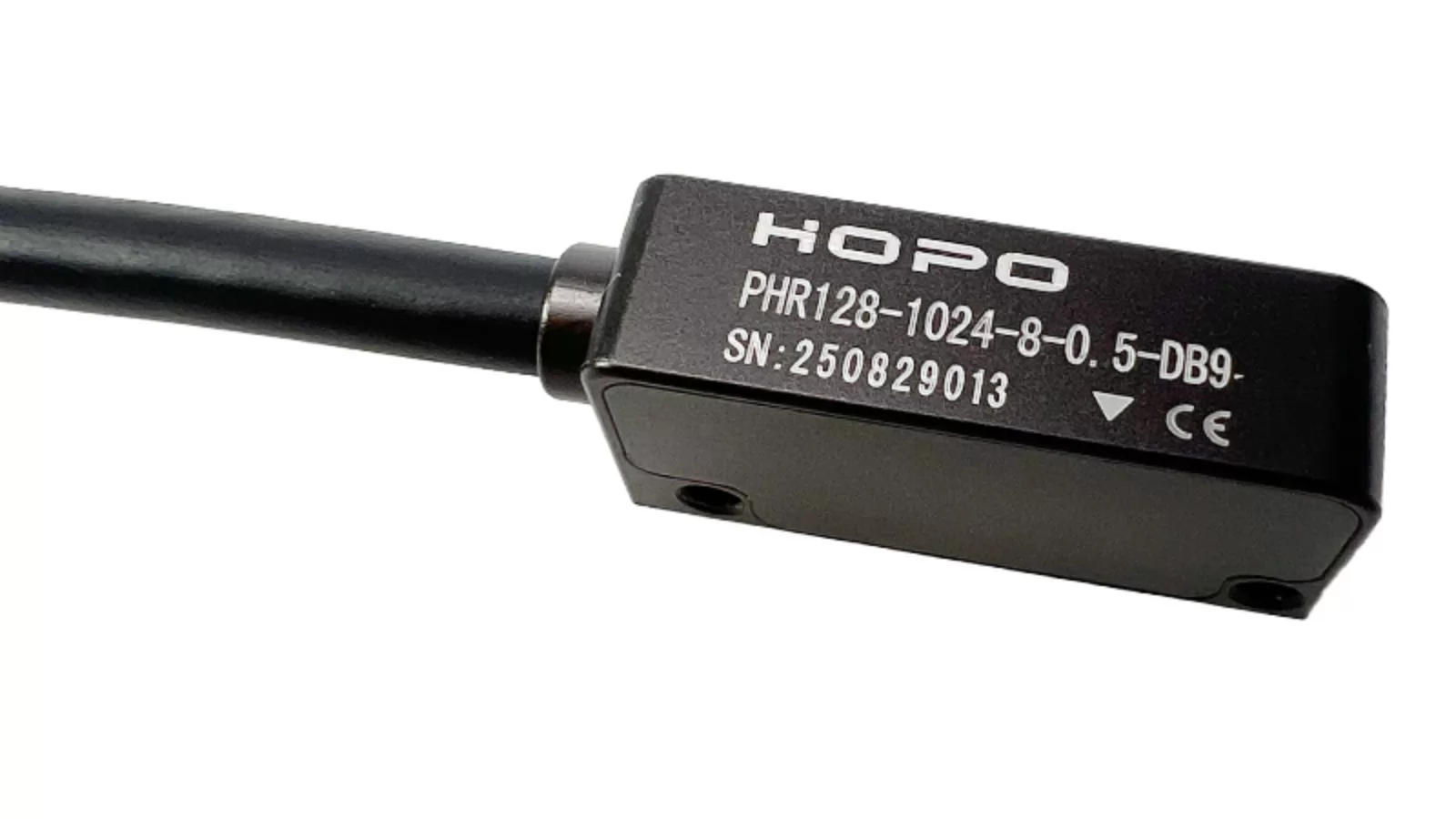
A rotary encoder readhead detects angular movement from a rotating disc or ring. Rotary readheads are used for motor feedback, rotary positioning, servo systems, robotics, and industrial machinery. Magnetic rotary ring readheads can be particularly useful where non-contact sensing and environmental resistance are important. Hopo offers rotary readhead solutions including the PHR, PS(TR), and LSPR series for different rotary encoder configurations; feel free to view Hopo Rotary Encoder Readheads for details.
Incremental Encoder Readheads
Incremental encoder readheads measure changes in position and normally generate pulses as the measuring element moves. A/B quadrature signals can provide movement direction and relative displacement, while a reference signal can establish a repeatable origin. Incremental systems are widely used in CNC equipment, servo motors, automation machinery, and linear motion systems where continuous motion feedback is required.
Absolute Encoder Readheads
Absolute encoder readheads provide position information associated with a specific location on the measuring element. They can be useful when a machine needs position information after startup or when returning to a reference position is undesirable. Absolute systems may require more sophisticated signal processing and communication interfaces, so controller compatibility should be verified during selection. For example, the HRA2000 Absolute Rotary Encoder Readhead is tailored for applications requiring instant absolute position feedback.
Encoder Readhead vs. Encoder Scale: What Is the Difference?
The encoder readhead and encoder scale perform different but complementary functions.
| Component | Main Function |
|---|---|
| Encoder Scale | Provides the physical or coded measurement reference |
| Encoder Readhead | Detects and interprets information from the scale |
| Signal Electronics | Processes the detected information |
| Controller | Uses feedback to monitor and control motion |
The scale may contain optical markings, magnetic poles, or another encoded pattern. The readhead detects changes in this pattern as relative movement occurs. This means that a readhead should always be evaluated together with its compatible scale or ring. Scale pitch, magnetic pattern, optical structure, sensing distance, and mechanical tolerances can all influence the final encoder performance.
Installation is equally important. Incorrect readhead-to-scale spacing or alignment can prevent the system from reaching its specified accuracy or resolution, even when the individual components meet their rated specifications.
Key Encoder Readhead Specifications to Consider
Selecting an encoder readhead requires more than comparing resolution. The following specifications should be evaluated according to the machine's actual requirements.
| Specification | Why It Matters |
|---|---|
| Resolution | Determines the smallest detectable movement |
| Accuracy | Indicates measurement error relative to the actual position |
| Repeatability | Indicates consistency when measuring the same position |
| Maximum Speed | Defines the highest supported motion speed |
| Sensing Distance | Determines the required readhead-to-scale gap |
| Output Signal | Determines how feedback is transmitted |
| Interface | Ensures compatibility with the controller or drive |
| IP Rating | Indicates protection against dust and water |
| Operating Temperature | Defines the usable environmental range |
| Scale Compatibility | Ensures the readhead matches the measuring element |
| Mounting Tolerance | Indicates installation flexibility |
Resolution, Accuracy, and Repeatability
These three specifications should not be treated as interchangeable. Resolution describes the smallest movement that the system can distinguish. Accuracy describes how close the measured position is to the actual position. Repeatability describes how consistently the system measures the same position. A readhead with very fine resolution does not automatically provide the same level of absolute accuracy. Procurement teams should therefore evaluate these specifications according to the machine's required positioning tolerance.
Sensing Distance and Alignment
The gap between the readhead and scale is particularly important for non-contact encoder systems. A small sensing distance may require more precise mechanical installation, while a wider allowable tolerance can make integration easier in industrial machinery exposed to vibration or mechanical variation. For OEM equipment, engineers should confirm the specified sensing distance, mounting dimensions, alignment tolerance, and available installation space before finalizing the design.
Output Signals and Interfaces
The output interface must be compatible with the receiving control system. Common configurations include A/B quadrature, A/B/Z, differential outputs, analog signals, and serial communication. For incremental industrial encoders, differential signaling can provide reliable transmission over suitable cable lengths and in electrically demanding environments. The controller or drive specifications should always be checked before selecting the readhead.
Encoder Readhead Applications
Encoder readheads are used wherever accurate motion or position feedback is required.
- CNC Machine Tools: CNC machines use encoder feedback to monitor axis or spindle movement. Linear readheads can measure axis displacement, while rotary readheads can provide angular or rotational feedback.
- Linear Motion and Servo Systems: Linear motors, precision stages, and servo mechanisms require continuous feedback to compare commanded movement with actual position. Encoder readheads provide the sensing component needed for closed-loop control.
- Industrial Automation: Automation equipment can operate in environments containing dust, oil, coolant, moisture, and vibration. Magnetic readheads are often attractive for these conditions because of their non-contact sensing and resistance to contamination.
- Precision Manufacturing and Measurement: Semiconductor equipment, inspection systems, and measurement machinery can require stable and accurate position feedback. Depending on the environment and performance requirements, optical or magnetic encoder readheads may be used.
How to Choose the Right Encoder Readhead
The selection process should begin with the machine requirements rather than with a single readhead specification.
1. Determine Linear or Rotary Motion
Identify whether the system measures straight-line displacement or angular movement. This determines whether a linear scale or rotary ring/disc configuration is required.
2. Select the Sensing Technology
Choose between optical, magnetic, or another sensing technology based on resolution requirements, environmental conditions, installation constraints, and application needs.
3. Choose Incremental or Absolute Feedback
Incremental feedback is suitable when relative movement and reference-based positioning are sufficient. Absolute feedback is preferable when the system needs direct position information after startup.
4. Define Resolution, Accuracy, and Speed
Determine the required resolution and actual positioning accuracy, then verify that the readhead can operate at the required linear or rotational speed. Avoid selecting the highest specification simply because it is available. The better approach is to match the specifications to the machine's actual tolerance and operating requirements.
5. Evaluate the Environment
Consider dust, oil, coolant, moisture, vibration, electromagnetic interference, and temperature. Environmental protection can be as important as measurement resolution in industrial applications.
6. Verify Electrical and Mechanical Compatibility
Before ordering, confirm output signal and interface, supply requirements, sensing distance, mounting dimensions, alignment requirements, scale or ring compatibility, and cable/connector configurations. For OEM projects, customization may also be required for dimensions, cables, connectors, output configurations, or other mechanical and electrical characteristics.
Hopo Encoder Readhead Solutions
Hopo provides encoder readhead solutions for both linear and rotary position-feedback applications. The LMS Series and LMD Series provide magnetic linear encoder readhead options for industrial motion applications (discover options with the Hopo LMS Series).
For rotary applications, Hopo's PHR Series, PS(TR) Series, and LSPR Series cover different rotary ring encoder configurations (explore our range of Hopo Rotary Readhead Solutions). For applications requiring absolute rotary feedback, the HRA2000 Absolute Rotary Encoder Readhead provides a reliable absolute option.
When selecting a Hopo encoder readhead, resolution, sensing distance, output interface, environmental conditions, mechanical dimensions, and scale compatibility should be considered together. This system-level approach helps ensure that the selected readhead is suitable for the complete machine rather than only meeting an individual specification.
Frequently Asked Questions About Encoder Readheads
Q1: What is an encoder readhead?
An encoder readhead is the sensing component that detects information from an encoder scale, ring, or track and converts it into electrical signals for position and motion feedback.
Q2: How does an encoder readhead work?
The readhead detects changes in a measuring element as relative movement occurs. Depending on its technology, it may use optical or magnetic sensing and then convert the detected information into electrical output signals.
Q3: What is the difference between a readhead and an encoder?
A readhead is a sensing component within an encoder system. A complete system may also include a scale or ring, signal electronics, and an interface. The readhead detects positional information, while the other components provide the measurement reference and process the resulting signals.
Q4: Are encoder readheads optical or magnetic?
Both optical and magnetic encoder readheads are available. Optical technology is often considered for high-resolution applications in controlled environments, while magnetic technology can be advantageous where contamination, vibration, or other industrial conditions are important factors.
Q5: How do I choose an encoder readhead?
Start with the motion type, sensing technology, incremental or absolute feedback requirement, resolution, accuracy, speed, environment, interface, sensing distance, and mechanical compatibility. The readhead should be matched to the scale and controller as part of the complete encoder system.
Conclusion
An encoder readhead is a key sensing element in modern position-feedback systems. Its technology, resolution, accuracy, speed capability, environmental protection, signal interface, and mechanical compatibility all influence the performance of the complete encoder. For engineers and procurement teams, the most effective selection approach is to evaluate the readhead together with its scale, controller, mechanical installation, and operating environment. By matching these factors to the actual application requirements, manufacturers can achieve reliable and accurate motion feedback without over-specifying the system.
For industrial and OEM applications, Hopo offers linear and rotary encoder readhead solutions covering magnetic, incremental, and absolute configurations, with options that can be matched to different mechanical and electrical requirements. Contact us today to learn more or request technical recommendations!
0
Comments
Leave a Comment
Your email address will not be published. Required fields are marked *
Name can't be empty
Email error!
Message can't be empty
😍
😜
😳
😌
😄
😘
😝
😒
😃
😚
😚
😛
😟
😧
😀
😉
😓
😱
😤
😣
😂
😥
😩
😠
😢
😭
😰
😨
😡
😆
😪
😅
😐
😇
😋
😴
👿
😕
😏
😷
😵
😟
😮
😯
😑
👧
👴
😧
😬
😾
👶
👱
👵
👸
🙀
👺
👦
👩
👨
😽
😿
🙈
💩
💥
💤
😼
😹
🙉
🔥
✨
💦
👎
✌
👆
👈
💪
💹
👍
👊
💴
💶
💷
💸
👉
💵
🙏
🌎
🏧
👏
💳
👇
💑
🙆
🙅
💁
👫
👭
🙎
🙇
👑
👔
Submit Comment
Most Popular
-
 Apr 09, 2026Top 10 Linear Encoder Manufacturers in The World 2026
 -
 Jun 24, 2026Top 10 China Encoder Manufacturer in 2026
 -
 Mar 24, 2026Top 10 Rotary Encoder Manufacturers in The World 2026
 -
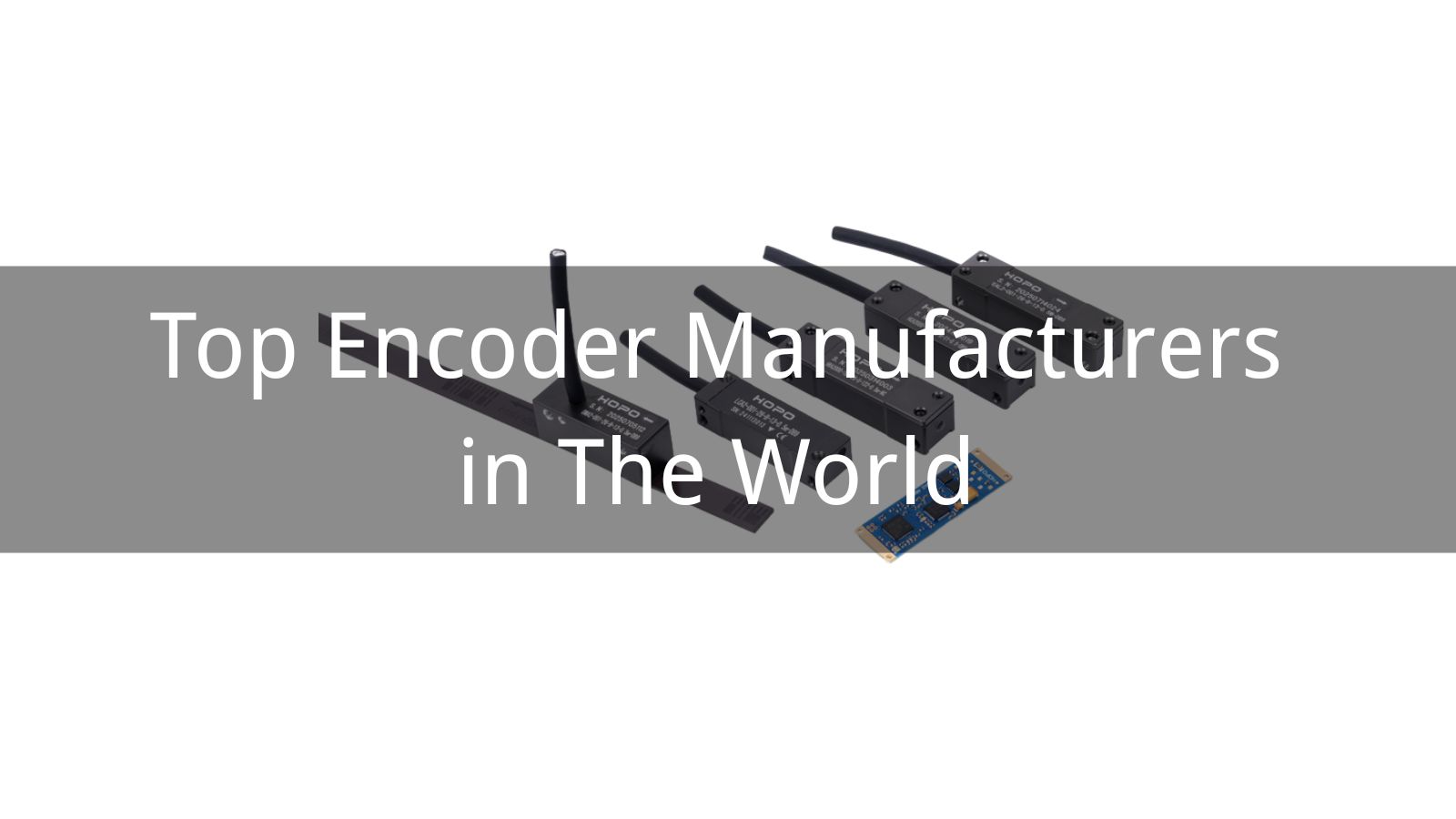 Jun 24, 2026Top 10 Encoder Manufacturers in The World 2026


Laster Blogs
-
 Sep 12, 2026Hopo Tech at CIOE 2026: Optical Linear Encoders for Precision Motion Control
 -
 Sep 08, 2026Hopo Tech Showcases Optical Encoder Solutions at CSEAC 2026
 -
 Sep 07, 2026Encoder Readhead: Working Principle, Types, Applications, and Selection Guide
 -
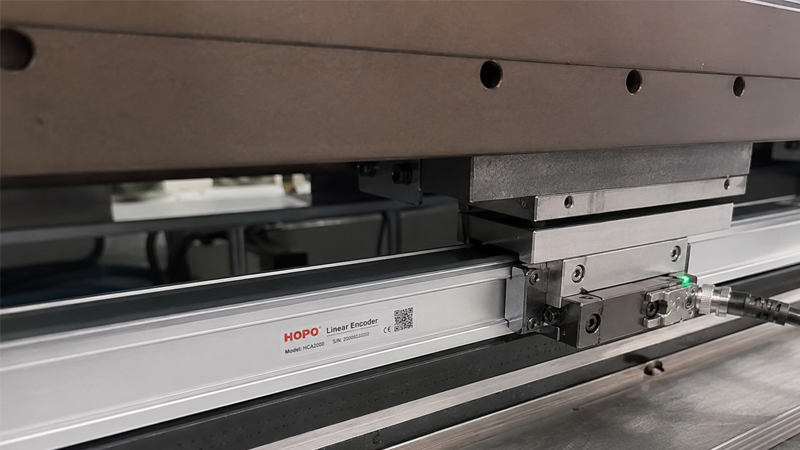 Aug 18, 2026Linear Motor "Runaway" – Causes, Risks, and Prevention


Set A Consultation Today
Name can't be empty
Email error!
Send Your Message
*We respect your confidentiality and all
information are protected.