
+86 0574-86288895
info@hopoencoder.com
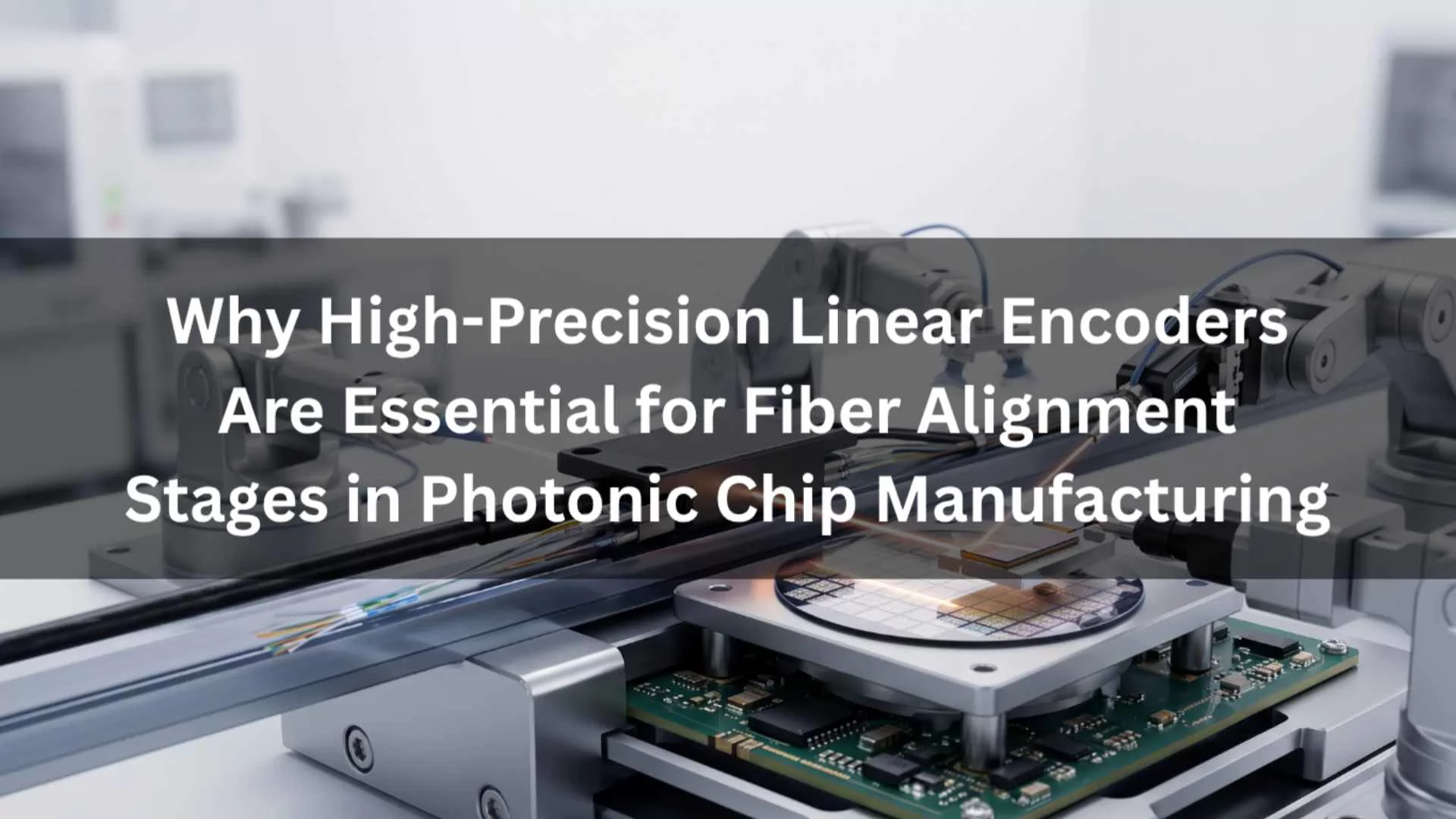
Driven by the explosive demand for AI infrastructure, the demand for optical modules has surged recently, as a result, the optical communication industry is experiencing strong demand. At the heart of this industry are optical chips, which perform the critical conversion between electrical and optical signals.
These chips are widely used in fiber access networks, mobile communication infrastructure, hyperscale data centers, and emerging silicon photonics applications. As optical modules evolve toward 800G, 1.6T, and beyond, manufacturing requirements are becoming increasingly demanding. Precision is no longer a competitive advantage—it is a necessity.
One of the most challenging processes in photonic chip manufacturing is fiber-to-chip align-ment. During optical packaging, optical fibers must be accurately aligned with microscopic waveguides on the photonic chip to maximize optical coupling efficiency. This process is often compared to threading a needle, but at a scale measured in microns and nanometers. Single-mode optical fibers typically have core diameters of only 5–10 μm.
To achieve optimal coupling efficiency:
Even a small lateral offset can significantly reduce performance. A 1 μm misalignment may reduce coupling efficiency by around 10%, while a 2 μm offset can result in losses approaching 30%.
Precision Fiber Alignment Stages are widely used throughout the optical communication manufacturing process, including:
What specification of our optical linear encoder can reach currently?
| Model | Travel range | Repeatability | Position accuracy |
|---|---|---|---|
| Micron series | 120mm | ±50nm | ±100nm |
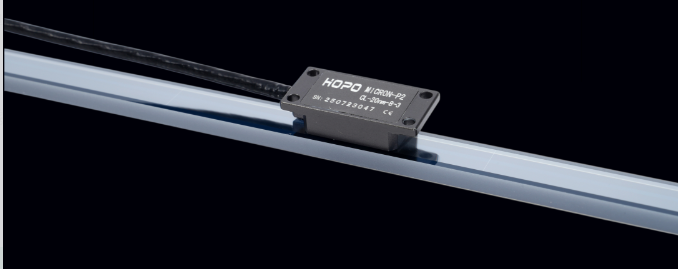
Linear optical encoders serve as the “eyes” of a precision positioning system. Unlike rotary encoders that infer position through mechanical transmission components, linear encoders directly measure actual displacement. This eliminates errors caused by backlash, screw pitch variations, thermal expansion, and mechanical wear.
The Micron Series optical Linear Encoder is specifically designed for high-precision positioning applications where installation space is restricted.
Precision fiber alignment starts with precise motion control, and precise motion control starts with reliable linear encoder feedback. For equipment builders seeking higher accuracy, greater yield, and improved cost efficiency, high-performance linear encoders are becoming an indispensable component of next-generation photonics manufacturing systems.


