Home/ Blog

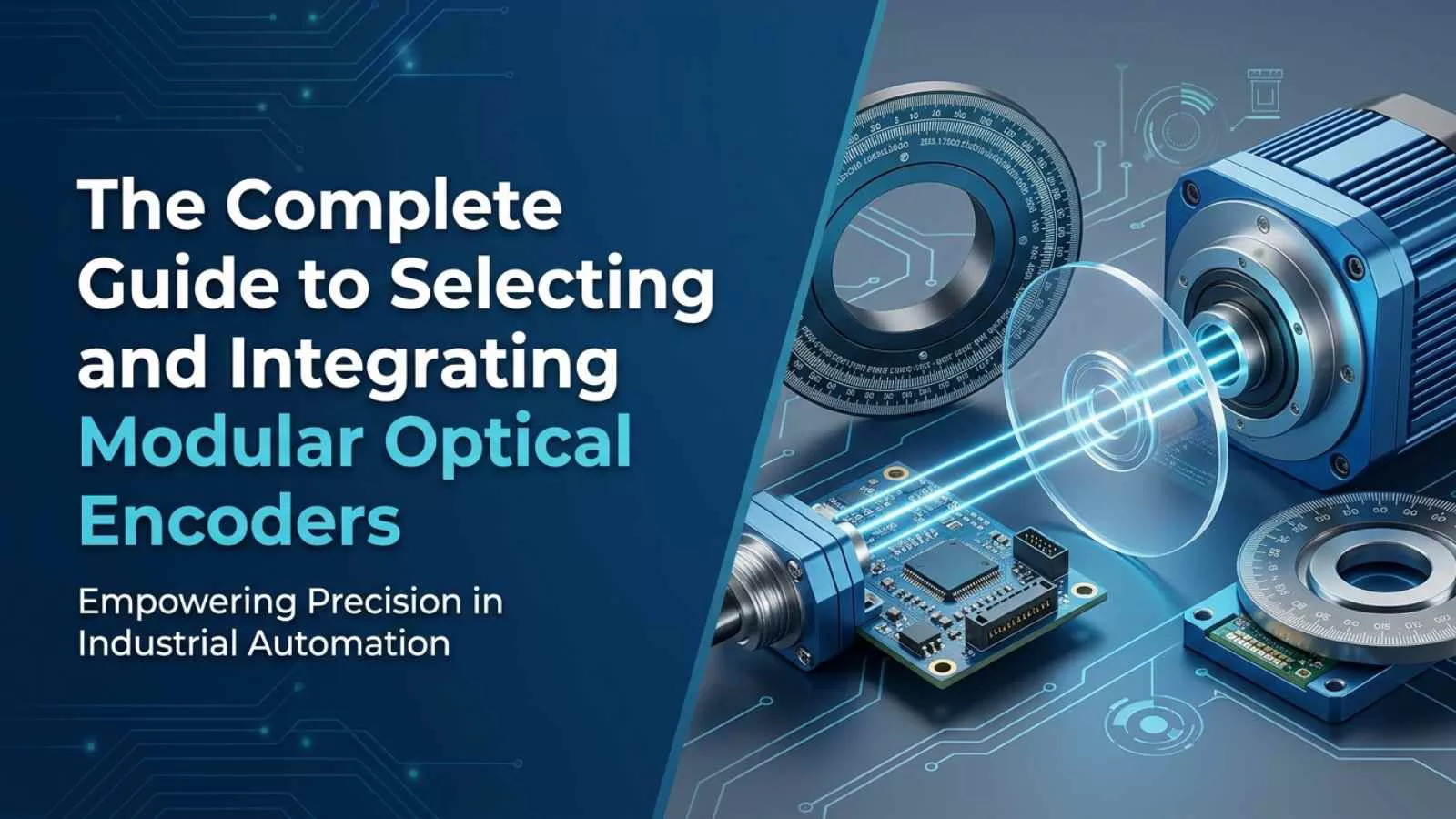
The Complete Guide to Selecting and Integrating Modular Optical Encoders in 2026

Jul 07, 2026

Precision has always been the foundation of modern manufacturing. Whether producing aerospace components, automotive parts, semiconductor equipment, or high-end automation systems, manufacturers rely on accurate position feedback to maintain machining quality and production efficiency.

Among different feedback technologies, modular optical encoders have become one of the most widely adopted solutions for applications that require high accuracy and repeatability. However, selecting an encoder is not always straightforward.It depends on the machine design, operating environment, accuracy requirements, and future production goals.

This guide provides a detailed overview of modular optical encoders, explaining how they work, where they are used, how to select the right solution, and what trends are shaping encoder technology in 2026.


Table of Contents
1. What Are Modular Optical Encoders?
2. Why Are Optical Encoders Important for CNC and Automation Systems?
3. What Are the Main Applications of Modular Encoder Systems?
4.What Are the Latest Trends in Encoder Technology in 2026?
5. How to Choose the Right Modular Optical Encoder for Your Application?
6. What Makes a Reliable Encoder Manufacturer Stand Out?
7. Conclusion

 What Are Modular Optical Encoders ?

A modular optical encoder is a precision position measurement device that detects movement through optical sensing technology.Unlike traditional integrated encoder systems where all components are assembled into a compact unit, modular optical encoders separate the main measurement elements, typically including the scale and scanning head.In a typical application, the encoder scale is fixed along the machine axis while the scanning head moves together with the machine component. During movement, the scanning head reads the scale pattern and converts displacement information into electrical signals.The CNC controller or motion control system then uses this information to accurately determine the machine position.


 Why Are Optical Encoders Important for CNC and Automation Systems?

Modern CNC machines operate with extremely small tolerances. In many industries, a machining error of only a few microns can affect product performance and increase production costs.The main purpose of an encoder is to create a closed-loop control system.

A typical process works like this:

  1. The CNC controller sends a movement command.
  2. The motor drives the machine axis.
  3. The encoder measures the actual movement.
  4. The encoder sends feedback data to the controller.
  5. The controller compares actual movement with the target position.
  6. The system corrects any deviation.

This continuous feedback process allows machines to achieve much higher accuracy compared with open-loop systems.


 What Are the Main Applications of Modular Encoder Systems

Modular encoder systems have become an essential part of modern industrial equipment because accurate motion feedback is required in almost every precision manufacturing process. From CNC machining centers to automated production lines, encoders provide the measurement information needed to control movement, improve accuracy, and maintain stable operation.

The application requirements of different industries are not the same. Some industries prioritize extreme precision, while others focus more on durability, environmental resistance, or cost-effective machine upgrades. Therefore, selecting the correct encoder technology depends on understanding the specific working conditions and performance expectations.CNC Machine Tools and Precision Machining
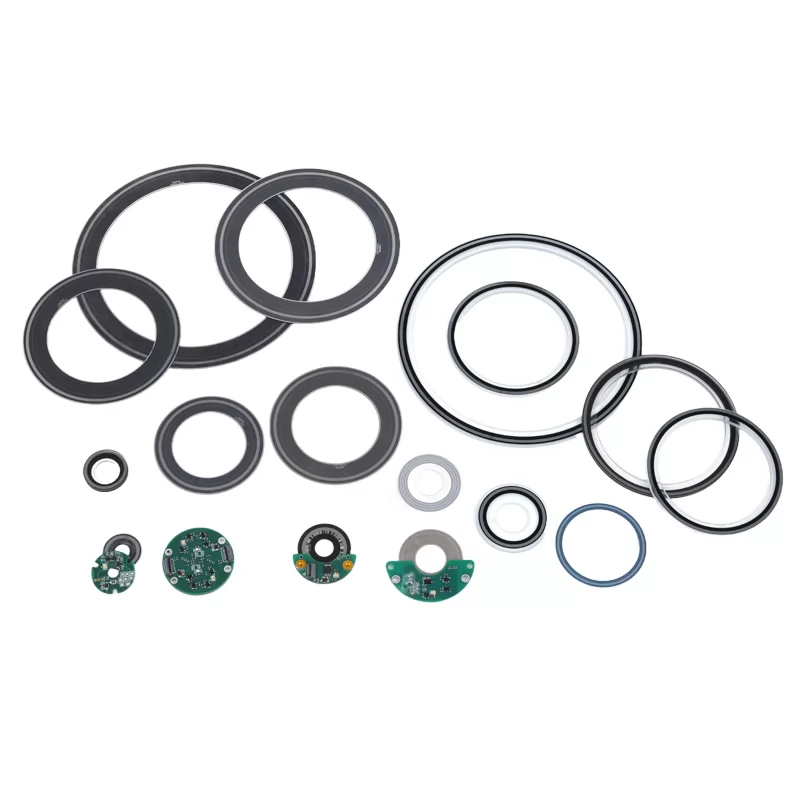
  • CNC machine tools are among the most important application areas for modular encoder systems.:Modern CNC equipment is expected to produce complex components with tighter tolerances while maintaining high production efficiency. Whether manufacturing aerospace parts, automotive components, molds, or precision mechanical parts, accurate axis positioning is essential.In CNC machines, encoders are commonly installed on linear axes or rotary components to provide real-time position feedback.
  • Grinding Machines and Ultra-Precision Manufacturing:Grinding is one of the manufacturing processes with the highest requirements for positioning accuracy.Unlike conventional machining, grinding operations often involve extremely small material removal amounts. Even minor positioning errors can affect.Optical encoder technology provides the resolution and stability needed for these applications.
  • Automation Equipment and Robotics:The development of industrial automation has created new demand for advanced encoder systems.Robots and automated machines must perform repetitive movements with extremely high consistency. Without accurate feedback, automation systems cannot maintain stable operation.Optical rotary encoders and magnetic rotary encoders are commonly used in robotic and motion-control applications.
  • Semiconductor and Electronic Manufacturing Equipment:The semiconductor industry represents one of the most demanding applications for precision measurement systems.Manufacturing processes such as wafer handling, inspection, and lithography require extremely accurate positioning because component sizes continue to decrease.High-performance optical encoder systems help equipment manufacturers achieve the precision required for advanced semiconductor production.
  • Machine Retrofit and Digital Readout Applications:Not every manufacturer needs to replace existing machines with new CNC equipment.Many factories continue using conventional milling machines, lathes, and grinders because their mechanical structures remain reliable.For these machines, upgrading with digital readouts (DRO systems) can be a practical solution.A digital readout system provides operators with real-time position information from machine axes, helping improve machining accuracy without a complete equipment replacement.For workshops looking to extend the service life of existing equipment, digital readouts provide an efficient modernization approach.
  • Hopo Technologies (Ningbo) Co., Ltd provides digital readout solutions designed for machine tool improvement and precision enhancement, helping users upgrade traditional equipment with practical measurement technology.


 What Are the Latest Trends in Encoder Technology in 2026? 

The encoder industry is evolving rapidly as manufacturing moves toward higher automation, smarter equipment, and more connected production systems.

In 2026, encoder development is influenced by several major trends, including higher precision requirements, intelligent feedback systems, improved environmental resistance, and deeper integration with digital manufacturing platforms.

  • Increasing Demand for Higher Accuracy and Resolution: One of the most important trends in encoder technology is the continuous demand for higher measurement accuracy.
  • Development of Smart Encoder Systems: Traditional encoders mainly provided position feedback.However, modern manufacturing requires more intelligent components that can communicate, analyze, and support predictive maintenance.
  • Better Integration with Industrial Automation Systems:As smart factories become more common, equipment components must communicate more effectively.
  • Growth of Magnetic Encoder Applications:Although optical encoder technology remains essential for high-precision applications, magnetic encoder solutions continue gaining popularity because of their durability and flexibility.


 How to Choose the Right Modular Optical Encoder for Your Application? 

Selecting the correct modular optical encoder requires a complete understanding of the machine, operating environment, and performance requirements.

A common mistake is choosing an encoder only based on resolution or price. In reality, successful applications require balancing multiple factors.
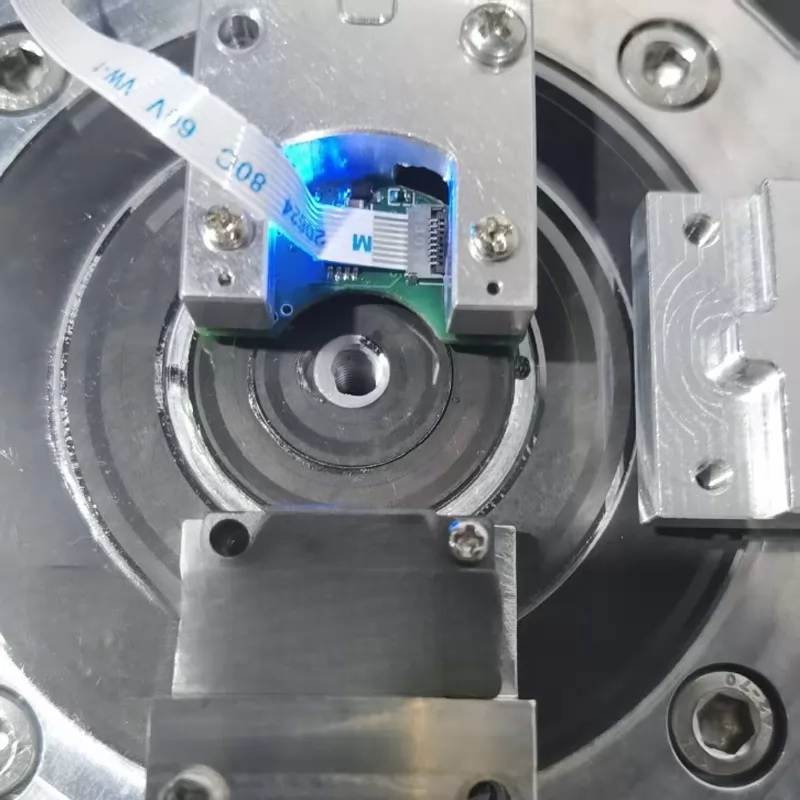
  • Define Your Accuracy Requirements:The first step is determining the required accuracy level. Different applications have different expectations.
  • Consider the Operating Environment: The working environment has a significant impact on encoder selection.
  • Check Mechanical and Electrical Compatibility: Proper compatibility reduces installation difficulties and prevents unnecessary modification costs.
  • Select a Supplier with Application Experience: A reliable encoder manufacturer should not only provide products but also understand how those products are used in real industrial applications.


 What Makes a Reliable Encoder Manufacturer Stand Out?

Choosing the right encoder manufacturer is an important decision because the supplier relationship often continues throughout the entire product lifecycle.

A reliable manufacturer should provide more than competitive pricing. They should offer consistent quality, technical expertise, and long-term support.


Why Choose Hopo Technologies (Ningbo) Co., Ltd?

For companies seeking reliable precision measurement solutions, Hopo Technologies (Ningbo) Co., Ltd provides a comprehensive range of encoder products designed for industrial applications.

The company’s product portfolio includes:

  • Magnetic Linear Encoders
  • Magnetic Rotary Encoders
  • Optical Linear Encoders
  • Optical Rotary Encoders
  • Digital Readouts

These solutions support various industries, including:

  • CNC machining
  • Machine tool manufacturing
  • Industrial automation
  • Precision measurement

By combining different encoder technologies, Hopo Technologies (Ningbo) Co., Ltd helps customers select solutions based on their actual requirements, whether they need high-precision optical feedback or durable magnetic measurement systems.


 Conclusion

As manufacturing continues moving toward higher precision and smarter automation, encoder technology has become a key factor in machine performance.

Choosing the correct encoder requires a complete understanding of accuracy requirements, operating conditions, installation limitations, and future production goals.

Optical encoder systems provide excellent precision for demanding applications, while magnetic encoder solutions offer strong reliability in challenging industrial environments. Digital readouts provide an effective way to upgrade conventional machines.

With a comprehensive product portfolio covering magnetic linear encoders, magnetic rotary encoders, optical linear encoders, optical rotary encoders, and digital readouts, Hopo Technologies (Ningbo) Co., Ltd supports customers in developing reliable and efficient precision measurement solutions for modern manufacturing.

0
Comments
Leave a Comment
Your email address will not be published. Required fields are marked *
Name can't be empty
Email error!
Message can't be empty
😍
😜
😳
😌
😄
😘
😝
😒
😃
😚
😚
😛
😟
😧
😀
😉
😓
😱
😤
😣
😂
😥
😩
😠
😢
😭
😰
😨
😡
😆
😪
😅
😐
😇
😋
😴
👿
😕
😏
😷
😵
😟
😮
😯
😑
👧
👴
😧
😬
😾
👶
👱
👵
👸
🙀
👺
👦
👩
👨
😽
😿
🙈
💩
💥
💤
😼
😹
🙉
🔥
💦
👎
👆
👈
💪
💹
👍
👊
💴
💶
💷
💸
👉
💵
🙏
🌎
🏧
👏
💳
👇
💑
🙆
🙅
💁
👫
👭
🙎
🙇
👑
👔
Submit Comment
Set A Consultation Today
Name can't be empty
Email error!
Send Your Message
*We respect your confidentiality and all information are protected.
Contact Us Now
Name can't be empty
Email error!
Message can't be empty
Send Message